Contructing the Mandala for Universal Peace
Lama Nubpa Chodak Gyatso has commissioned one of the few artisans in the world with the skills to properly construct the Shi-tro Mandala for Universal Peace. Pema Namdol Thaye is a world-renowned t'hangka painter and sculptor, and has been commissioned by museums in Europe and Asia to complete similar projects.
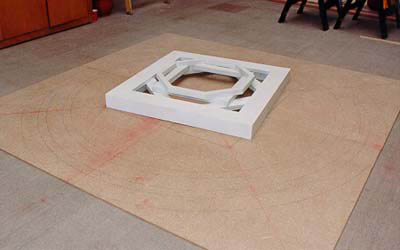
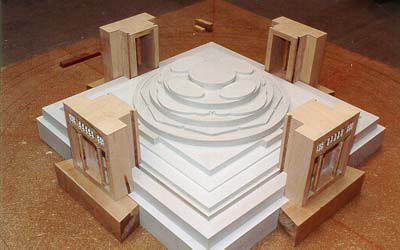
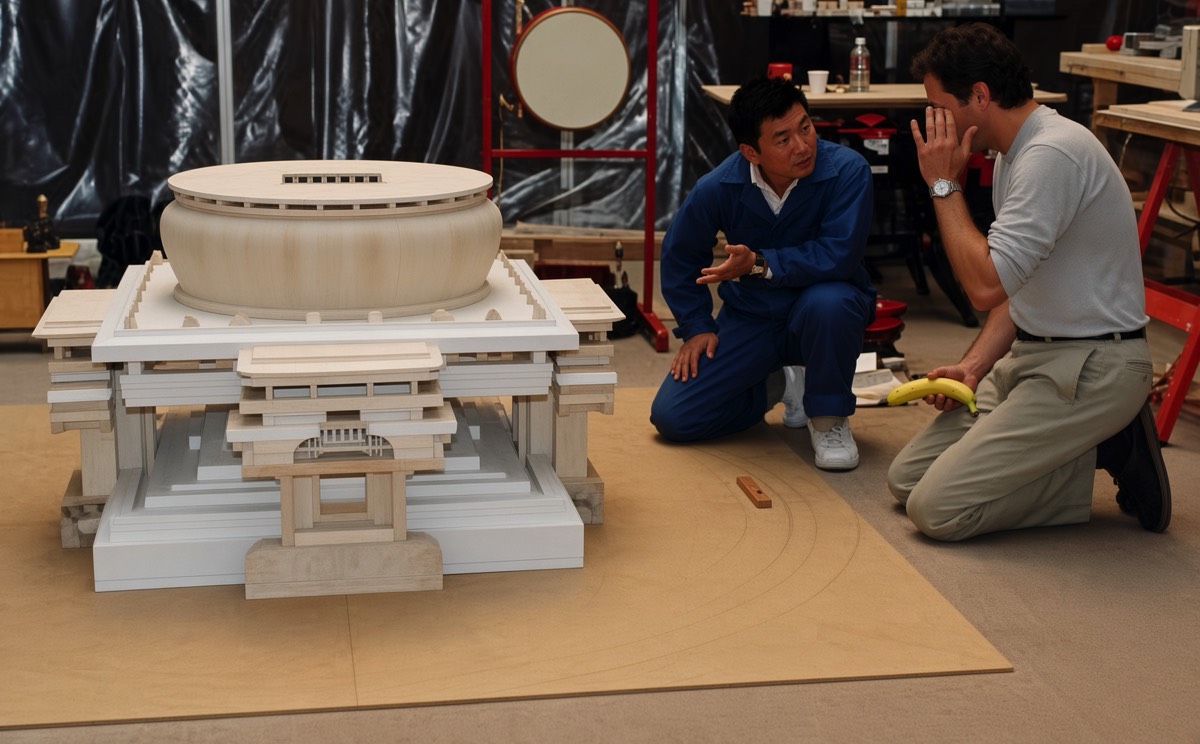
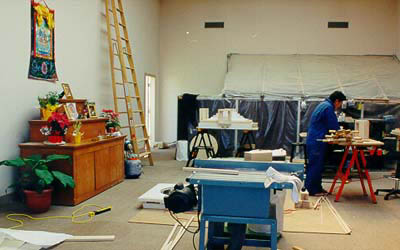
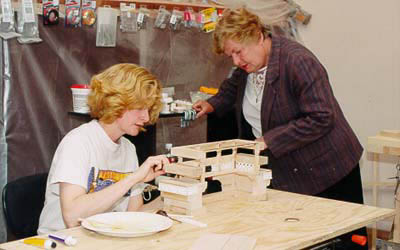
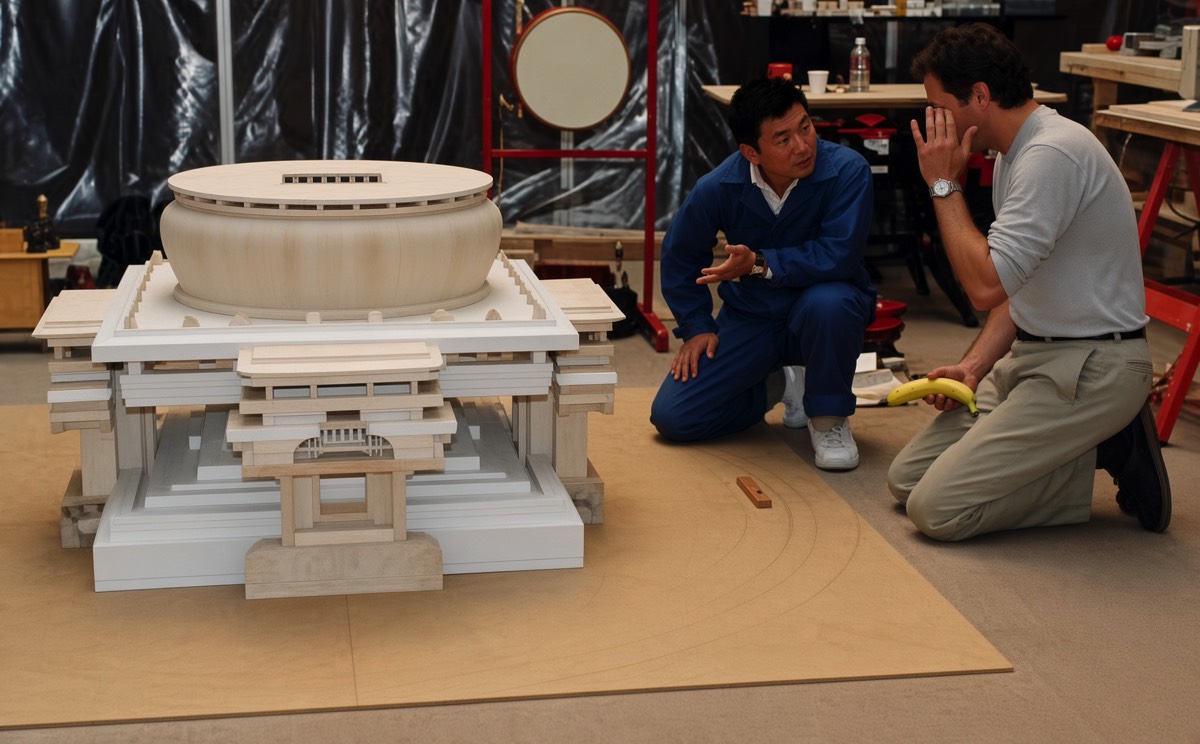
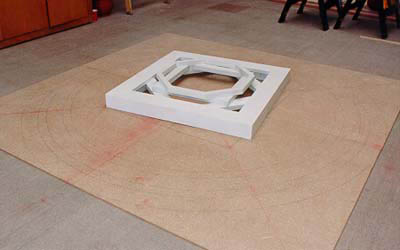
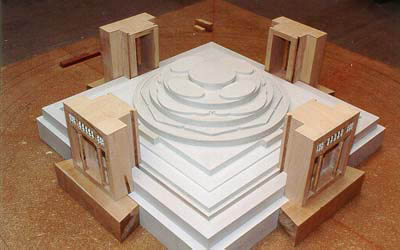
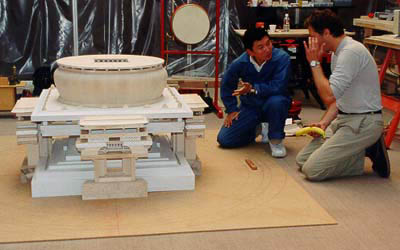
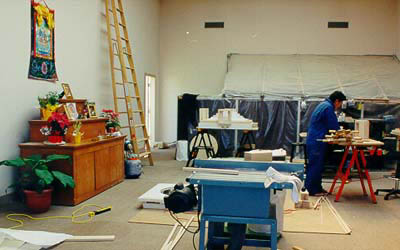
Mr. Thaye led a small team of assistants in constructing the Shi-tro Mandala, which required 7,000 hours of labor, much of it by volunteers. Workers employed a combination of traditional and modern methods and materials in carving, mold-making, casting, sanding, and painting the various elements comprising the mandala. It was built to very precise measurements and proportions, handed down to Mr. Thaye through a centuries-old Tibetan lineage.
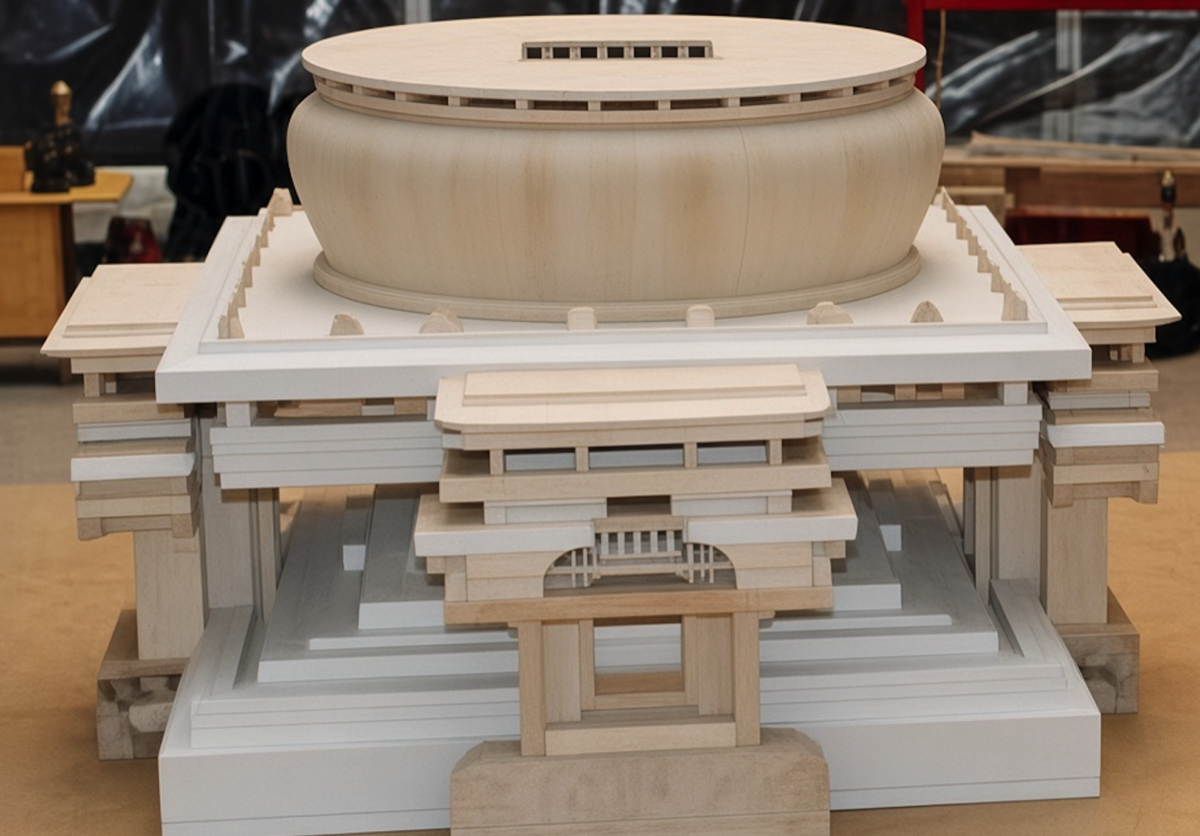
It was carved mainly from wood and clay and adorned with gems; modern resins were also used. One hundred clay statues of deities, sculpted in Bhutan, are arranged in the center of the mandala on an interior platform according to an ancient, sacred blueprint for inner peace. His Holiness the Dalai Lama blessed the mandala in June of 2000. It was consecrated in an elaborate ceremony on November 17, 2000, after being completed .
Constructing the Mandala for Universal Peace
Lama Nubpa Chodak Gyatso has commissioned one of the few artisans in the world with the skills to properly construct the Shi-tro Mandala for Universal Peace. Pema Namdol Thaye is a world-renowned t'hangka painter and sculptor, and has been commissioned by museums in Europe and Asia to complete similar projects.
Mr. Thaye led a small team of assistants in constructing the Shi-tro Mandala, which required 7,000 hours of labor, much of it by volunteers. Workers employed a combination of traditional and modern methods and materials in carving, mold-making, casting, sanding, and painting the various elements comprising the mandala. It was built to very precise measurements and proportions, handed down to Mr. Thaye through a centuries-old Tibetan lineage.
It was carved mainly from wood and clay and adorned with gems; modern resins were also used. One hundred clay statues of deities, sculpted in Bhutan, are arranged in the center of the mandala on an interior platform according to an ancient, sacred blueprint for inner peace. His Holiness the Dalai Lama blessed the mandala in June of 2000. It was consecrated in an elaborate ceremony on November 17, 2000, after being completed .
Chagdud Gonpa thrived as a Buddhist monastery and temple in Tibet for eight centuries before His Eminence Chagdud Tulku Rinpoche established the Chagdud Gonpa Foundation in the United States in 1986. H. E. Chagdud Tulku Rinpoche is a highly revered teacher and meditation master, as well as a Tibetan doctor and accomplished artist. He is one of the last iving Tibetan lamas to have completed his education in Tibet prior to the Chinese Communist takeover. As a result of Rinpoche's compassionate, enlightened intent, as well as the pure motivation and hard work of his lamas and students, more than twenty Chagdud Gonpa centers have been established in North and South America. These centers offer Tibetan Buddhist teachings and meditation practices-profound methods that lead to the simple goal of good-heartedness. As Rinpoche himself has taught-cultivating a good heart in daily life by practicing virtue, compassion, equanimity, love and joy-this is the way to enlightenment and the goal of Buddhist practitioners.
More than a decade ago, H. E. Chagdud Tulku Rinpoche invited Lama Nubpa Chodak Gyatso, then living in India, to come to Los Angeles to serve as the resident lama of Chagdud Gonpa T'hondup Ling, Lama Gyatso was able to fulfill Rinpoche's request in 1996, when he moved to Los Angeles. Lama Gyatso's own Buddhist training began in Tibet at the age of four. He later trained with many great Nyingma masters, and studied Buddhist and Western philosophy in India at the postgraduate level. Lama Gyatso's knowledge in the ritual arts of Tibetan Buddhism is exceptionally broad, and he has overseen numerous stupa and statue
consecration projects.
_____________
Contructing the Mandala for Universal Peace
Lama Nubpa Chodak Gyatso has commissioned one of the few artisans in the world with the skills to properly construct the Shi-tro Mandala for Universal Peace. Pema Namdol Thaye is a world-renowned t'hangka painter and sculptor, and has been commissioned by museums in Europe and Asia to complete similar projects.
Mr. Thaye led a small team of assistants in constructing the Shi-tro Mandala, which required 7,000 hours of labor, much of it by volunteers. Workers employed a combination of traditional and modern methods and materials in carving, mold-making, casting, sanding, and painting the various elements comprising the mandala. It was built to very precise measurements and proportions, handed down to Mr. Thaye through a centuries-old Tibetan lineage.
It was carved mainly from wood and clay and adorned with gems; modern resins were also used. One hundred clay statues of deities, sculpted in Bhutan, are arranged in the center of the mandala on an interior platform according to an ancient, sacred blueprint for inner peace. His Holiness the Dalai Lama blessed the mandala in June of 2000. It was consecrated in an elaborate ceremony on November 17, 2000, after being completed .
Click on the thumbnails
| Shi-tro Mandala for Universal Peace | ||
The Shi-tro Mandala for Universal Peace project is sponsored by T'hondup Ling, the Los Angeles center of Chagdud Gonpa Foundation (a non-profit Buddhist organization), and involves a rare three dimensional Tibetan sculpture called the Shi-tro Mandala for Universal Peace. The project was conceived by T'hondup Ling's resident Lama, Lama Nubpa Chodak Gyatso, to preserve a vital part of the vanishing Tibetan sacred culture and to function as a focal point for a formal peace and non-violence curriculum. This traditional Tibetan Mandala is the first of its kind to be constructed in the United States, and measures eight feet in diameter and twelve feet in height.
Blessed by the Dalai Lama in June of 2000, construction of the Shi-tro Mandala was completed in November of 2000 after nearly one year of construction at Forest Lawn, Glendale. The Mandala is currently being shown at the Pacific Asia Museum in Pasadena as the central piece in an eight-museum citywide exhibition celebrating the theme The Universe (February - May 2001).
Though often made by sprinkling sand on a flat surface, all mandalas are three-dimensional, with sand mandalas only hinting at the top view of a dazzingly elaborate creation. Due in part to the large committment of time, expertise and funding needed to create three-dimensional mandalas, there are only a few in the world. Requiring months to build, such mandalas, unlike sand mandalas, are not dismantled upon completion. Their multilayered symbolism conveys spiritual meaning for years to come
Only a handful of artists in the world possess the vast esoteric knowledge of Buddhist ritual, symbolism and philosophy that is needed to create a three-dimensional mandala. By supporting and dosucmenting their work, we can help preserve this ancient culture that continues to be threatened by extinction.
It is well documented that all but a few of Tibet's 6000 monasteries were destroyed and that more than 1.2 million Tibetans perished during the Communist Chinese occupation. His Holiness the Dalai Lama, venerated worldwide for his tireless efforts on behalf of peace and nonviolence, led the flight in to exile of thousands of Tibetans who now live in India, Nepal and Bhutan. One of the primary goals of His Holiness has been the preservation of sacred Tibetan art and culture, which he believes can benefit the people of all nations and cultures
—————